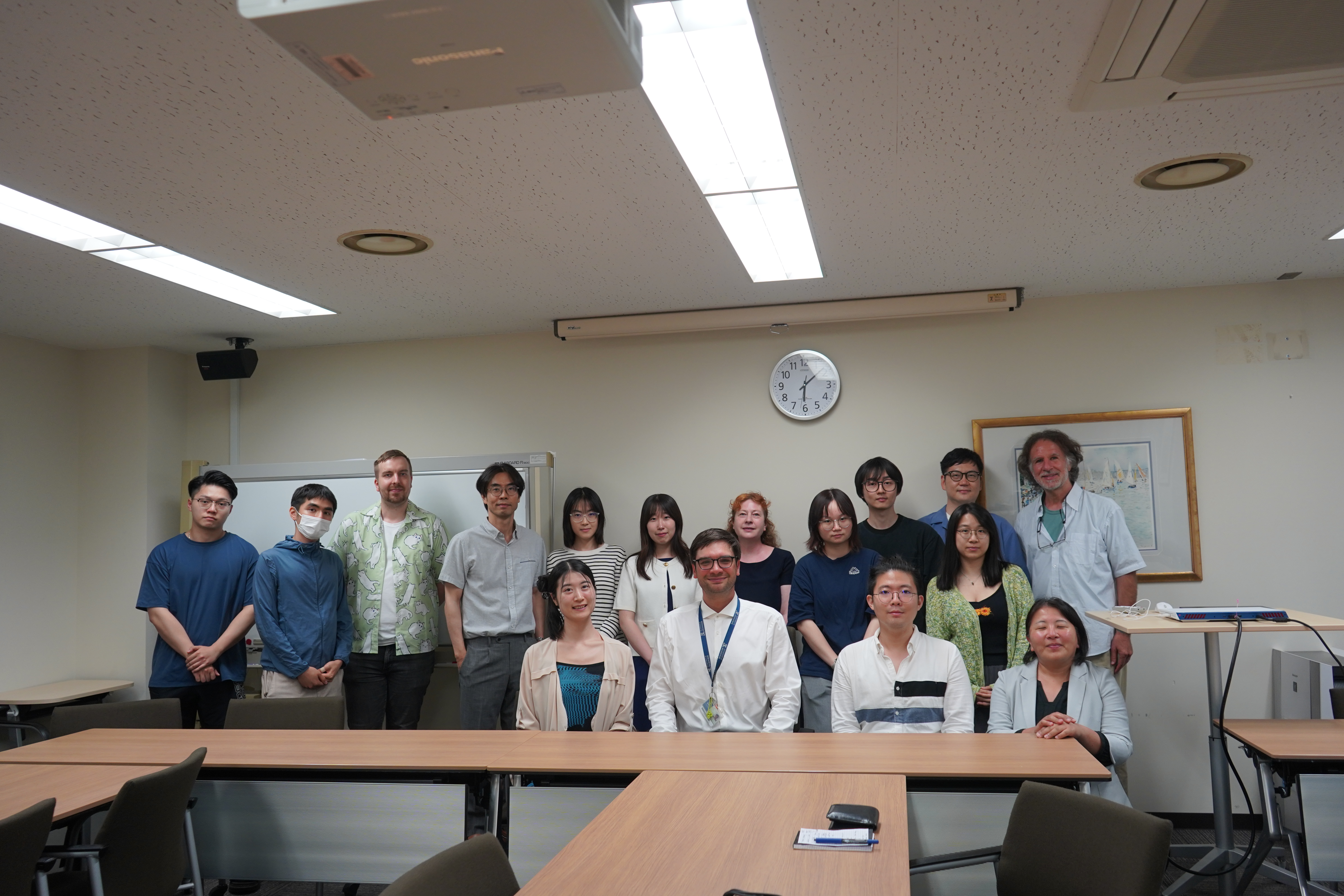
7月17日、メディア・ツーリズム研究センターによる主催で、「北海道大学―メルボルン大学 ジョイント・ワークショップ: Imagining Cultural Tourism in East Asia(東アジアにおける文化ツーリズムを想像する)」が開催されました。本ワークショップは、東アジアにおける文化ツーリズムの多様な展開を、メディア、ポピュラーカルチャー、歴史、記憶といった視点から多角的に検討することを目的とし、大学院生による研究発表と海外研究者による特別招聘講演から構成されました。
今回の研究会では、メディア・ツーリズム研究センターに所属する金成玟教授が総合司会を務め、開会の辞を述べるとともに、会議全体の進行を担当しました。
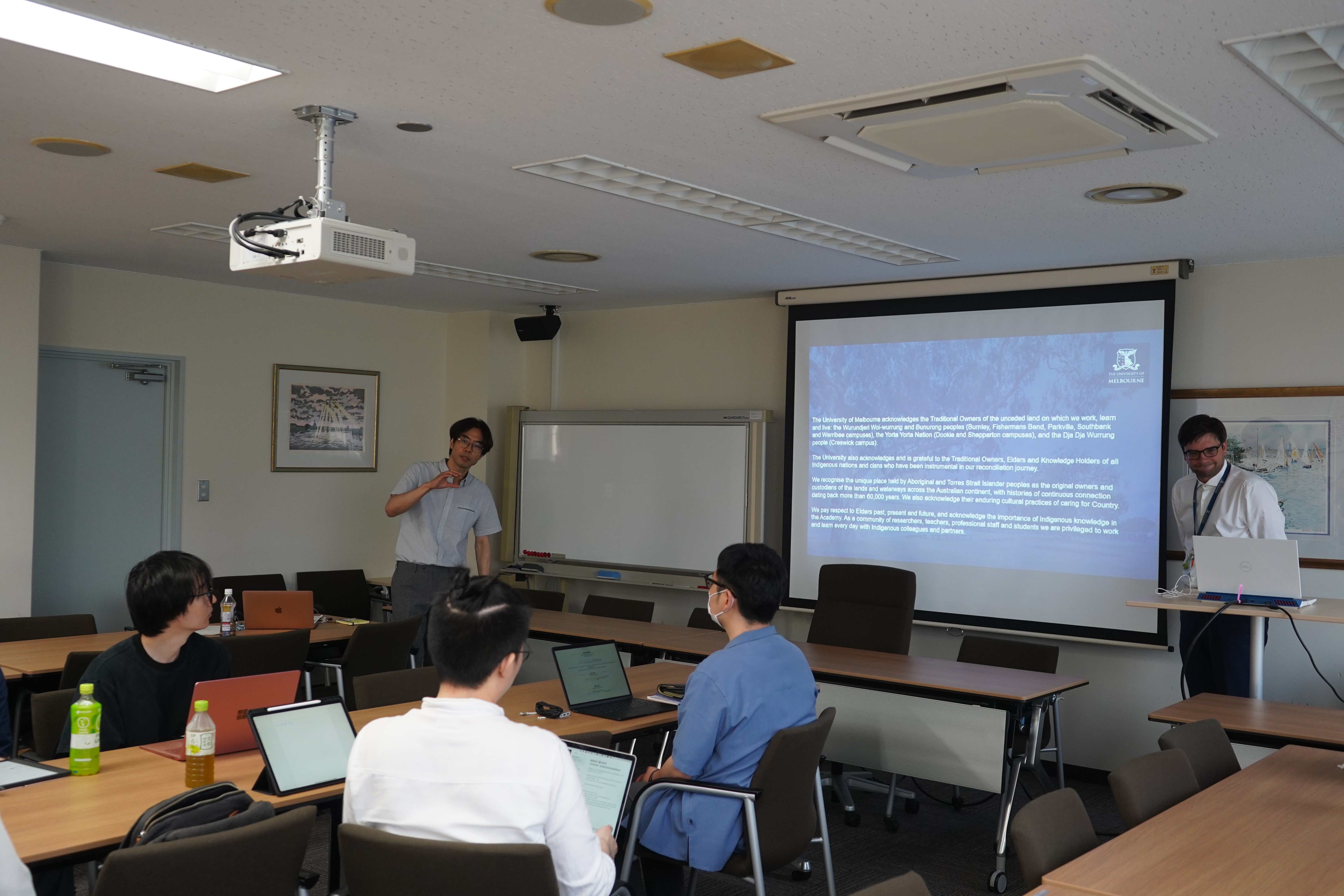
前半の大学院生研究発表セッションでは、北海道大学の大学院生4名が登壇した。VTuberを事例にポップカルチャー外交とプラットフォーム政治を論じた発表、日本の1970年代観光メディアにおける国家イメージ形成を航空会社の事例から分析した研究、植民地期に出生した日本人のアイデンティティと韓国料理をめぐる戦後ノスタルジアに関する考察、さらに中国湖北省博物館を事例とした古代楽器の展示と観光体験の分析など、扱われたテーマは多岐にわたりました。これらの発表を通じて、文化ツーリズムが国家戦略、メディア表象、記憶の継承、博物館実践などと複雑に結びついていることが示されました。
後半の特別招聘講演では、メルボルン大学アジア研究所のアダム・ジュワフニック氏を招き、「“K-rikey! That’s so k-awaii”: Cool Japan, the Korean Wave, and Beyond」と題する講演が行われました。講演では、コロナ禍以降の観光動向を踏まえつつ、日本と韓国のポピュラーカルチャーがソフトパワーとしていかに文化ツーリズムと結びついてきたかが論じられ、オーストラリアにおけるジブリ作品や韓国映画のロケ地観光といった具体例を通じて、東アジア文化の混交の実態が示されました。
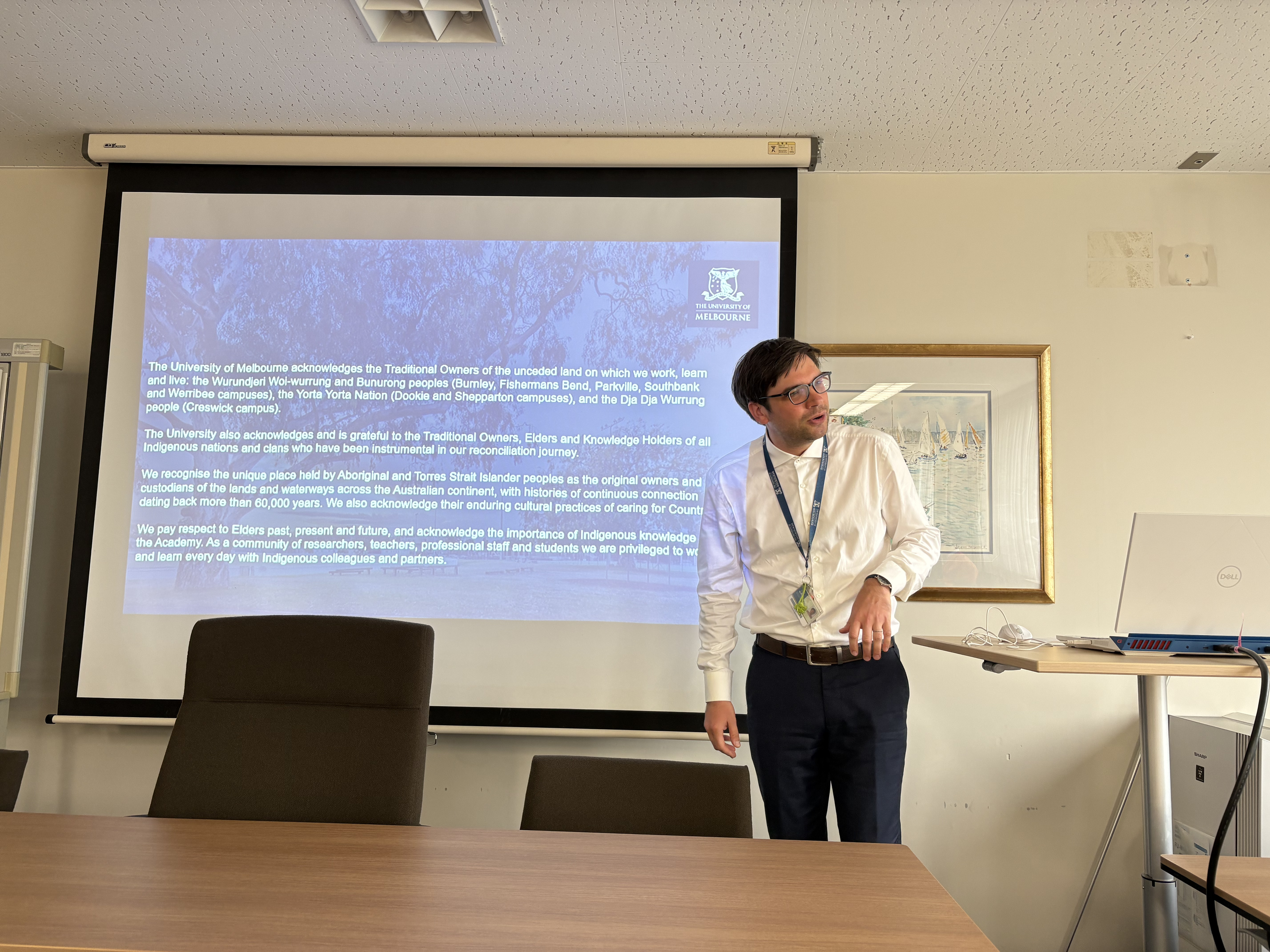
閉会にあたっては、センター長パイチャゼ・スヴェトラナ教授より総括が行われ、本ワークショップが日豪間、さらには東アジア地域を横断する文化交流研究の今後の発展に寄与するものであることが強調されました。本ワークショップは、若手研究者の育成と国際的研究ネットワークの強化を同時に達成する意義深い機会となりました。
On 17 July 2025, the Center for Media and Tourism Studies (CMATS), Hokkaido University, hosted the Hokkaido University–University of Melbourne Joint Workshop: Imagining Cultural Tourism in East Asia at the Institute of Media and Communication Studies, Hokkaido University. The workshop aimed to explore diverse forms of cultural tourism in East Asia through the lenses of media, popular culture, history, and memory.
At this workshop, Sungmin Kim (Professor, Institute of Media and Communication Studies, Hokkaido University), a member of the Center for Media and Tourism Studies, served as the overall moderator. He delivered the opening remarks and oversaw the proceedings of the workshop.
The first session featured graduate student presentations from Hokkaido University. Four speakers addressed a wide range of topics, including VTubers and pop-culture diplomacy, Japan’s postwar image-making in the 1970s tourism media, postwar nostalgia for Korean cuisine and identity among colonial-born Japanese, and the use of ancient musical instruments as tourism resources in a Chinese provincial museum. Together, these presentations highlighted the complex entanglements between cultural tourism, media representation, and historical memory.
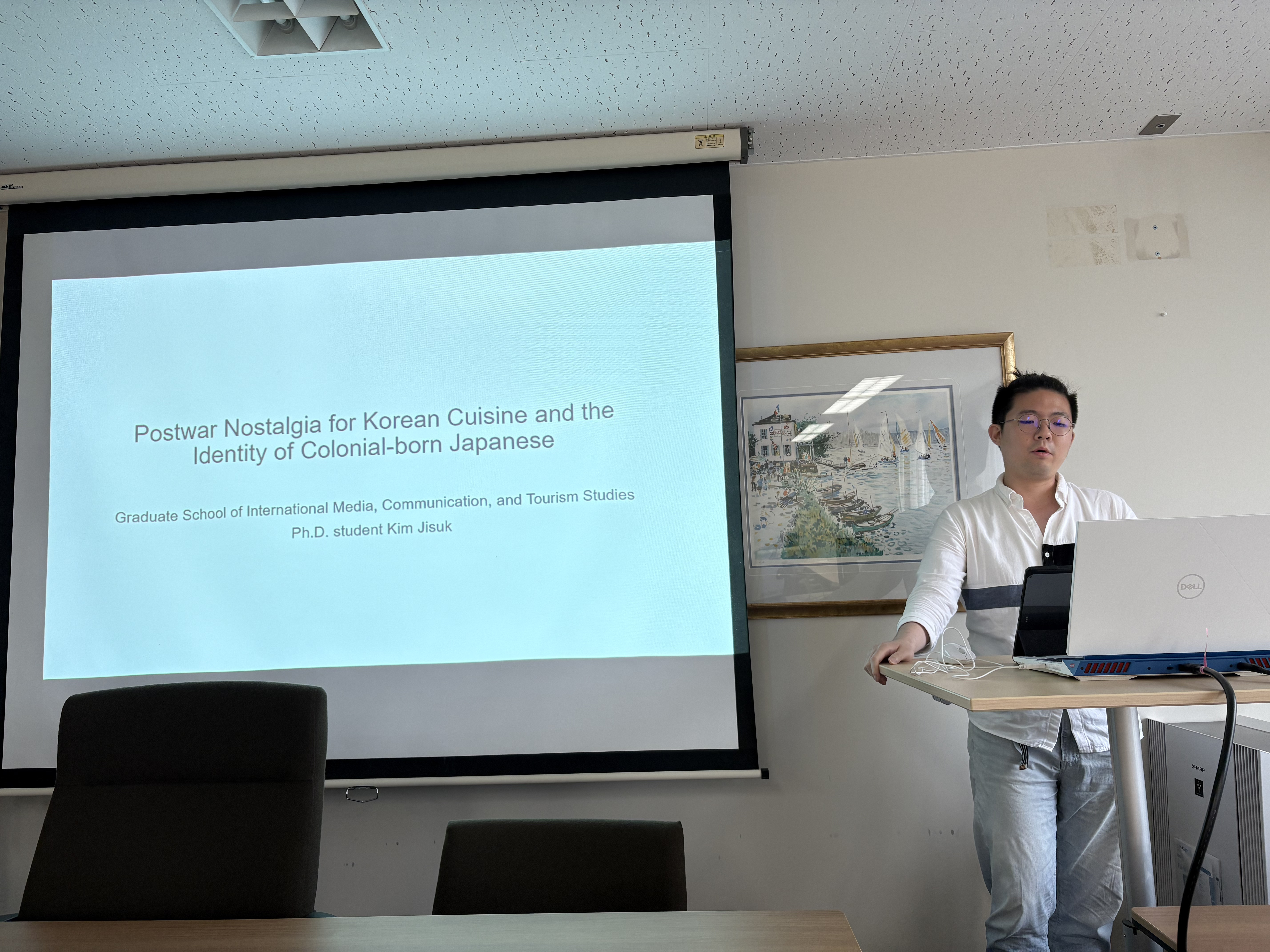
The second half of the workshop consisted of a special invited lecture by Dr Adam Zulawnik (Asia Institute, University of Melbourne), entitled “K-rikey! That’s so k-awaii”: Cool Japan, the Korean Wave, and Beyond. Drawing on post-pandemic tourism trends, the lecture examined how Japanese and Korean popular cultures have functioned as soft power and generated new forms of contents tourism, with particular attention to their recontextualisation within multicultural Australian settings.
In the closing remarks, the Director of CMATS, Prof. Paichadze Svetlana emphasised the significance of the workshop in fostering international academic exchange and supporting early-career researchers. The event successfully strengthened collaborative ties between Hokkaido University and the University of Melbourne and contributed to ongoing discussions on cultural tourism and transnational cultural flows in East Asia.